Publications involving the TED Lab (from 2026 onward)
Flooding effects on coastal high-latitude ecosystems
My role: Collaborator
PI: Karen H. Beard (Utah State University)
co-PIs: A. Joshua Leffler (South Dakota State University), Katharine C. Kelsey (University of Colorado Denver)
Funding: U.S. National Science Foundation (NSF)
Keywords: Alaska; Arctic; CH₄ fluxes; CO2 fluxes (GEP, ER, NEE); Geese; Herbivory; High-tide floods; International Tundra Experiment (ITEX); Litter decomposition (Tea Bag Index); Micro-environment; Open-top chambers (OTCs); Plant community composition; Plant functional traits; Plant functional types (PFTs); Roots; Summer warming; Tundra; ex-typhoon Merbok; Yukon-Kuskokwim (Y-K) Delta; Wetlands
Overview
Over the past four decades, coastal high-latitude regions have experienced some of the most dramatic effects of climate change. The Arctic has warmed nearly four times faster than the global average, while its coastal zones are increasingly threatened by altered flooding regimes. Melting sea and land ice, combined with relative sea-level rise, land subsidence, and more frequent storm surges, are exposing low-lying deltaic plains to recurrent inundation. Yet, the extent to which flooding alters these ecosystems and its ecological consequences remain poorly understood.
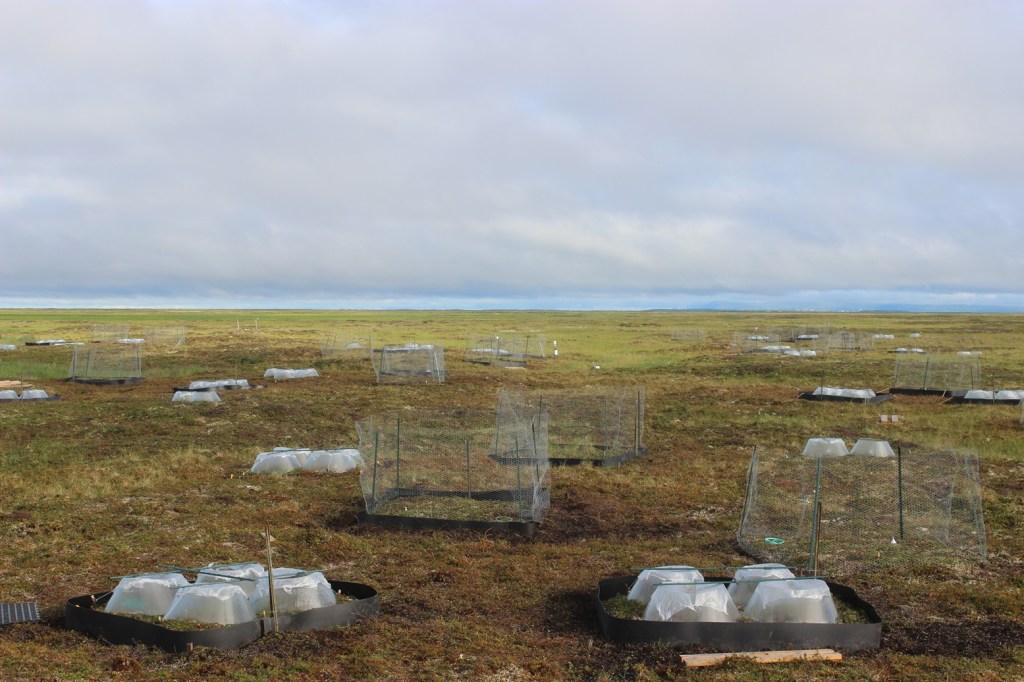
This project investigates how increased high-tide flooding, alone and in combination with warming and herbivory, influences plant functional traits, community composition, and key ecosystem processes such as CO₂ and CH₄ fluxes and decomposition in the Yukon-Kuskokwim (Y-K) Delta (Alaska), one of the largest river deltas in North America. The research contributes to a broader understanding of how multiple interacting stressors – flooding, temperature, and grazing – shape community and ecosystem responses in Arctic coastal landscapes.

Approach
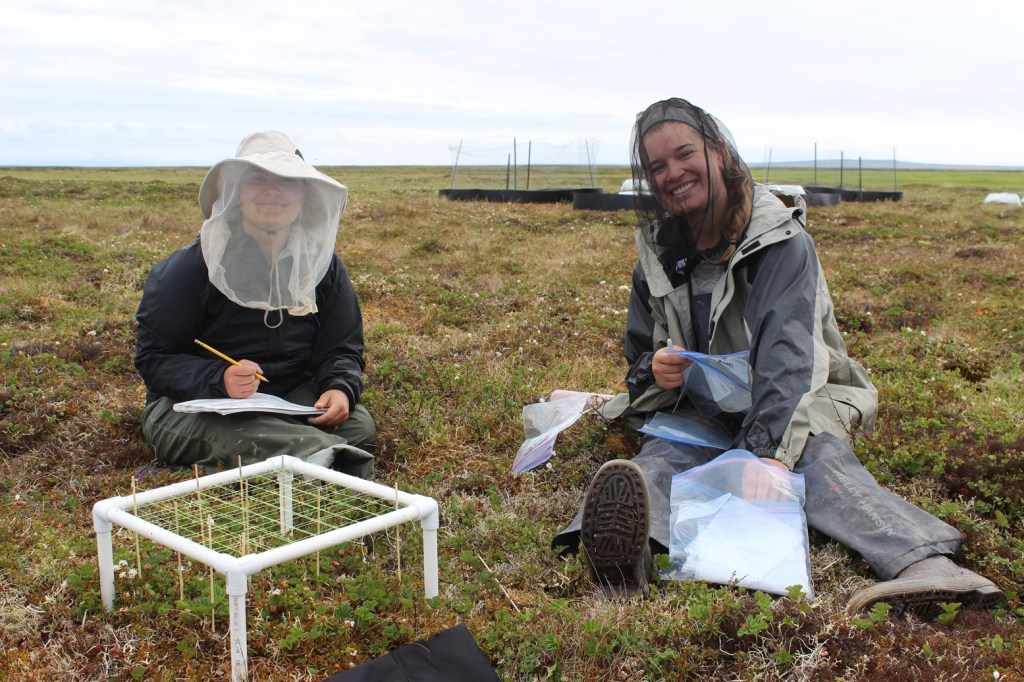
This project integrates large-scale field experiments, mesocosm studies, laboratory manipulations, and landscape-scale observations to disentangle the effects of flooding and its components – such as changes in soil salinity, soil moisture, and sediment deposition – as well as warming and herbivory, on coastal tundra ecosystems. Fieldwork was conducted over three summer campaigns (2022-2024).
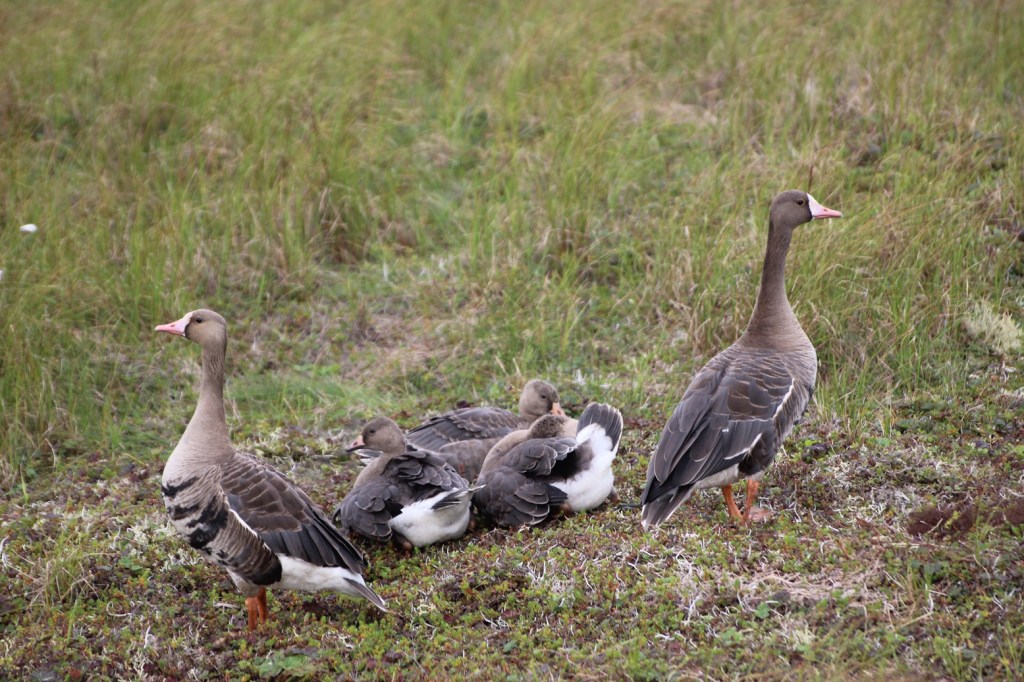
A large-scale field experiment simulating flooding and warming was conducted in two contrasting plant communities: a lowland wetland prone to flooding and an upland tundra less frequently inundated. A complementary mesocosm experiment simulated flooding, warming, and goose herbivory in two lowland wetlands at slightly different elevations, both flood-prone but differing markedly in plant-community composition.
A series of laboratory experiments further isolated specific mechanisms by manipulating salinity, moisture, temperature, goose feces deposition, and sediment load, using both bare soil cores and intact vegetation-soil turfs transported from the field.
Finally, landscape-scale surveys were established after ex-typhoon Merbok (2022), which caused extensive inland inundation up to 30 km from the coast, providing a rare opportunity to assess the ecological consequences of a natural flooding event.
Selected findings by 2025
Published research as of 2025 primarily derives from the factorial field experiment simulating flooding and warming in lowland wetland plant communities. Results indicate that these drivers modify plant-community composition by increasing the abundance of the already dominant graminoids while reducing the accumulation of standing dead biomass (Petit Bon et al., 2024), with cascading effects on CO₂ and CH₄ exchange (Kelsey et al., 2025). Such rapid increases in biomass production and turnover, particularly among graminoids with high-quality litter, have important implications for carbon and nutrient cycling in increasingly flood-prone Arctic coastal ecosystems.
 TED lab