Publications involving the TED Lab (from 2026 onward)
Scaling up: Global ecological syntheses
My role: Collaborator
PIs: Several, depending on network or study
Funding: Multiple sources, depending on network or synthesis initiative
Keywords: Biomes; Collaborative efforts; Decomposition; CH₄ and CO2 fluxes (GEP, ER, NEE); Global syntheses; Herbivory Network; International Tundra Experiment (ITEX) Network; Meta-analysis; Microclimate in Ecology and Biogeography (MEB) Network; Nutrient Network (NutNet); Micro-environment; Open-top chambers (OTCs); Plant community composition; Plant functional traits; Plant functional types (PFTs); Reviews; Summer warming; Tea Bag Index (TBI) Network; Trait Diversity Network (TraitDivNet); Tundra biome
Overview
Understanding how ecosystems respond to global environmental change requires scaling ecological knowledge from local experiments and observations to continental and biome-wide patterns. This line of research contributes to major international collaborations that integrate experimental and observational datasets from hundreds of sites worldwide. These networks combine environmental, trait, vegetation, and ecosystem data to identify global-scale patterns in functional traits, biodiversity, community composition, and ecosystem processes. Through these coordinated efforts, we aim to advance our understanding of how climate change shapes plant communities and ecosystems from the plot to the global scale.
Approach
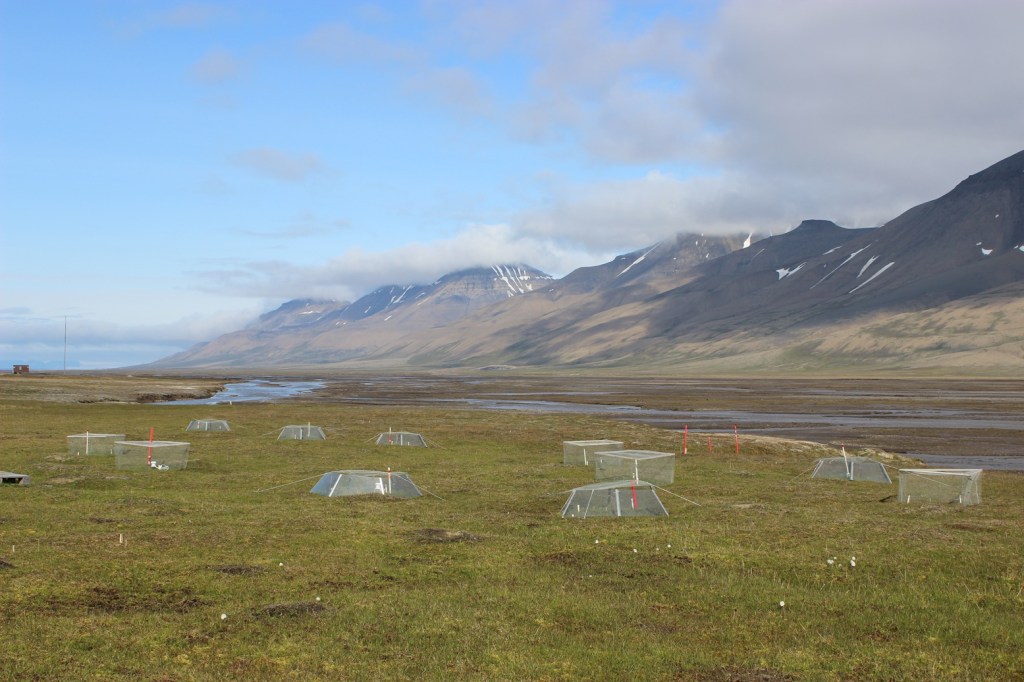
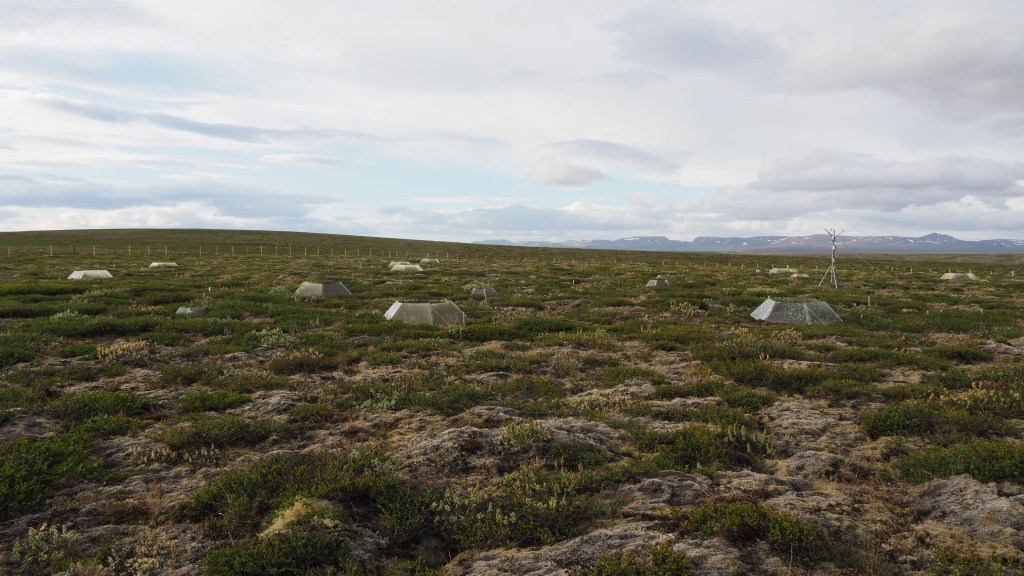
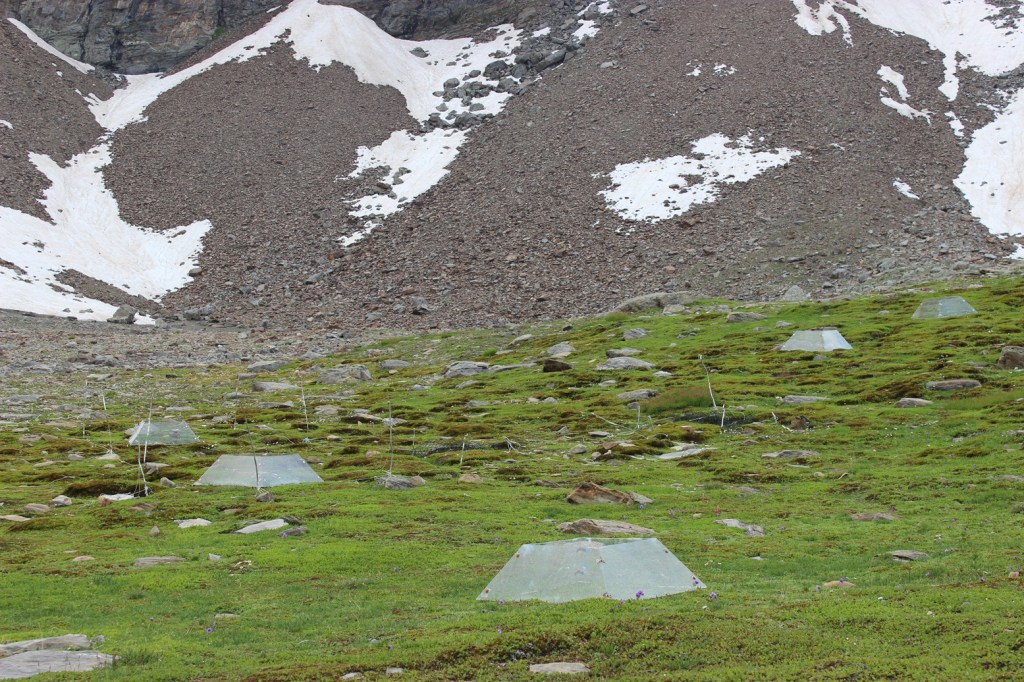
This research relies on data synthesis, meta-analyses, and systematic reviews that integrate site-level datasets into harmonized global frameworks. Using open ecological data and collaborative analytical pipelines, these initiatives examine how ecological patterns and processes vary along climatic, environmental, and productivity gradients. Some networks incorporate experimental manipulations, such as passive warming through ITEX-style OTCs, while others rely primarily on short- and long-term observational data. Together, these global collaborations provide a unified perspective that bridges mechanistic local studies with large-scale ecological understanding and prediction under global change.
Selected findings by 2025
Collaborative synthesis efforts have yielded important insights into large-scale ecological patterns and dynamics. Across 56 warming experiments at 28 Arctic and alpine sites, Maes et al. (2024) reported a ~30% increase in summer ecosystem respiration over the past 25 years. Patterns in biodiversity, however, appear more complex: using 42234 records of 490 vascular plant species from 2174 Arctic plots, García-Criado et al. (2025) found no directional change in species richness from 1981-2022, although widespread turnover occurred. Species gains and losses were greatest where warming was strongest, and shrub expansion, particularly of erect shrubs, was linked to local species losses, highlighting the ecological implications of Arctic shrubification.
Using thousands of standardized tea bag incubations, Sarneel et al. (2024) showed that global moisture and temperature variation decouple early-stage litter decomposition rates from stabilization, while Schwieger et al. (2025) demonstrated that substantial warming is needed to accelerate decomposition in field conditions.
Finally, Barbero-Palacio et al. (2024) highlighted the pivotal role of herbivore diversity in structuring plant communities and ecosystem functioning, underscoring the importance of understanding how functional differences among herbivores regulate ecosystems as a key research priority for the future (Barrio et al., 2025).
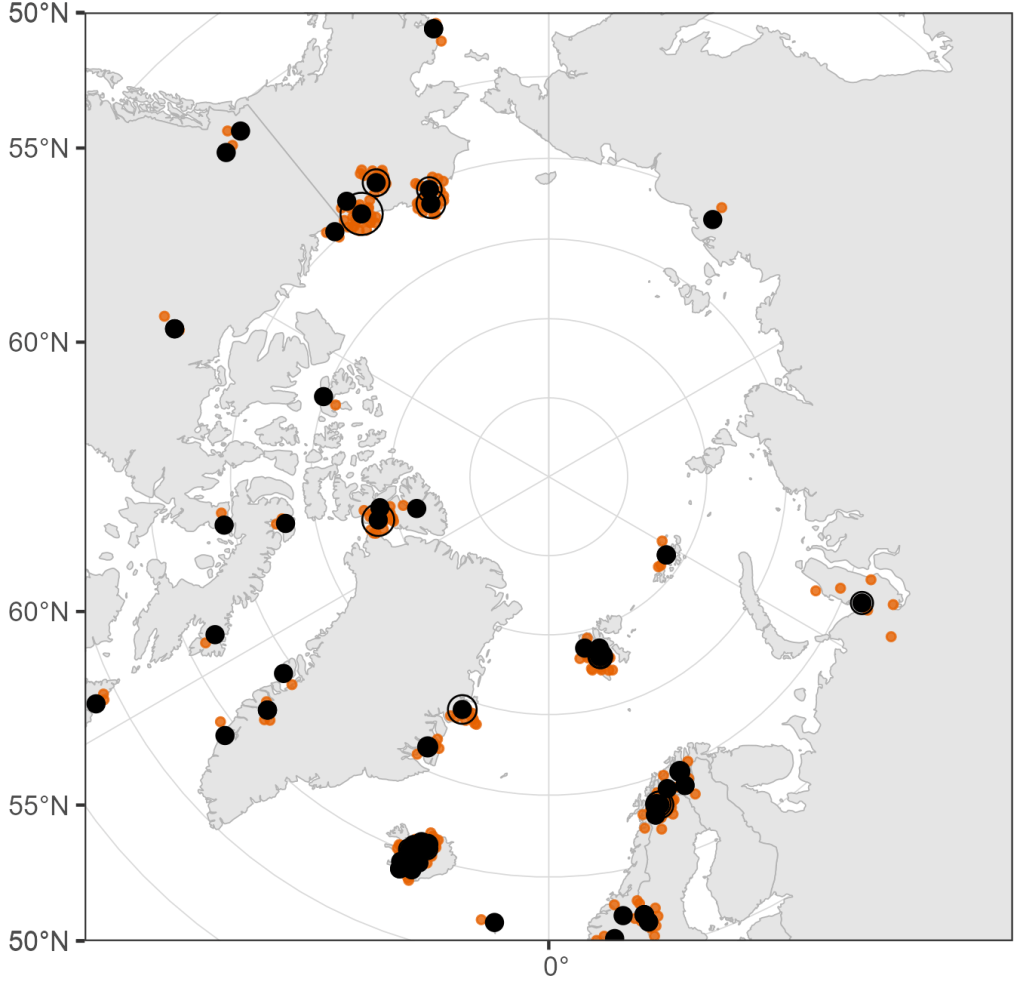
Publications involving the TED Lab (from 2026 onward)
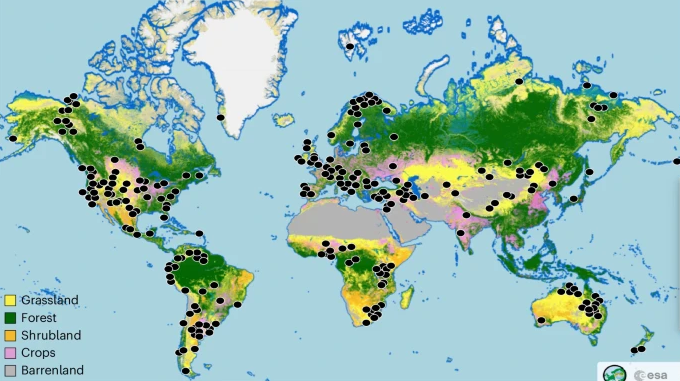
How much grassland does the Earth really have?
Grasslands cover vast portions of the planet and play a central role in food production, biodiversity, and the global carbon cycle. Yet, despite their importance, estimates of how much grassland actually exists worldwide have long varied widely, creating substantial uncertainty in assessments of ecosystem functioning and climate mitigation potential.
In this study, we show that much of this uncertainty stems from how grasslands are defined and mapped using global land-cover datasets. By combining high-resolution satellite products with expert, field-based knowledge, we identify widespread misclassification of grasslands as forests, shrublands, croplands, or other land-cover types. These errors are especially common in regions where woody plants are sparse, seasonal, or unevenly distributed.
After correcting for these biases, we estimate that grasslands cover about 23% of the Earth’s ice-free land surface, substantially less than many widely cited values. This smaller extent implies that grassland soil carbon stocks are likely underestimated on a per-area basis, with important consequences for how grasslands are represented in global carbon budgets.
More broadly, this work underscores a key message for global ecology: satellites alone cannot fully capture ecosystem identity. Integrating local ecological expertise remains essential for accurately mapping the Earth’s biomes, particularly when such maps inform climate policy and land-management decisions.
Reference:
MacDougall, A. S. et al. (2026). The global extent of the grassland biome and implications for the terrestrial carbon sink. Nature Ecology & Evolution.
The article link is available via the Publications page.
Posted: 1 February 2026
 TED lab